The Refugee Archive - Global Navigation
Donate
Our Foundation

Honoring and Preserving Shared Human Journeys

We believe that every story holds the power to shape the future. By combining meticulous archival preservation with visual and qualitative advocacy, we connect individual voices to global dialogues.

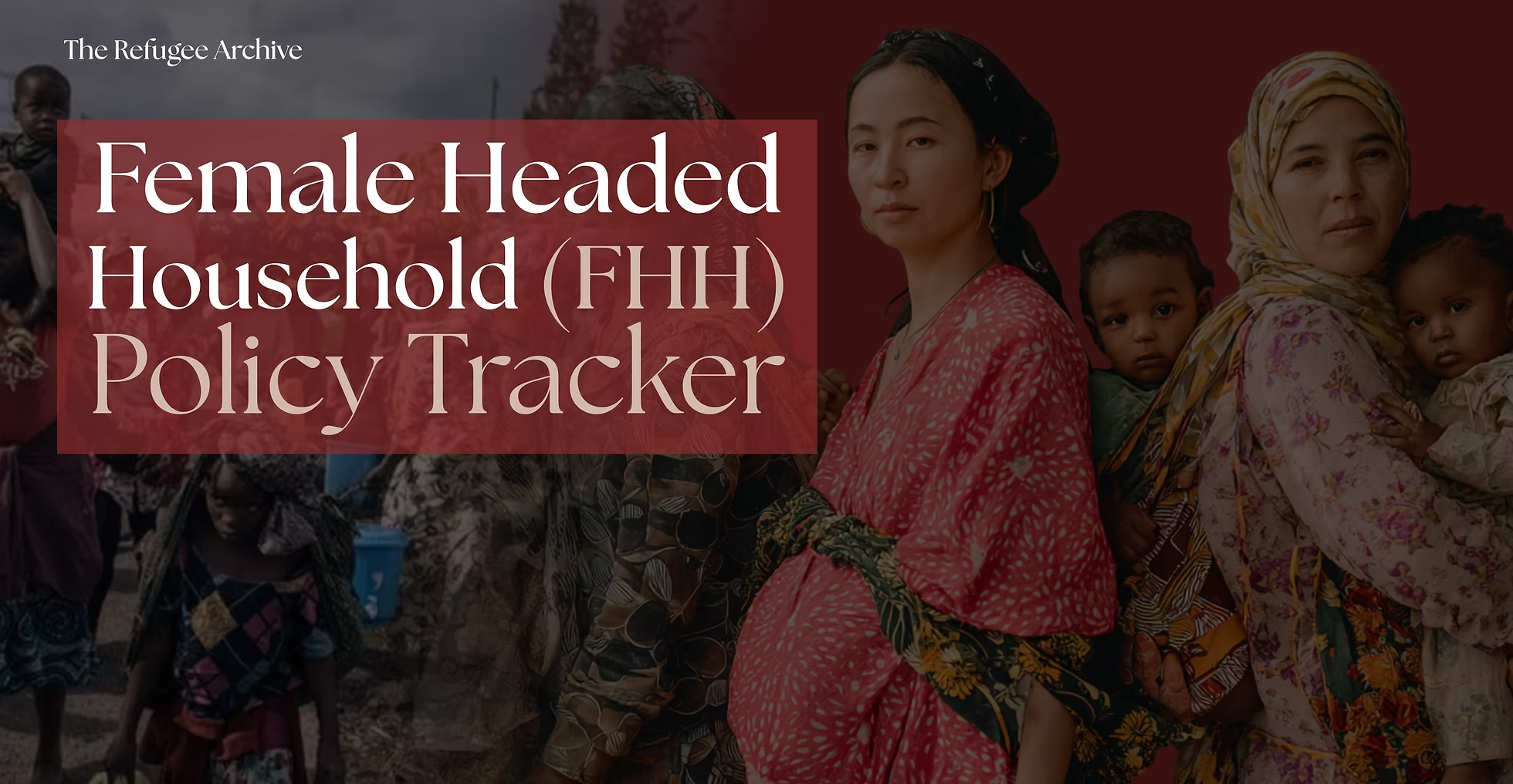
Female Headed Household (FHH) Policy Tracker

What It Is

Female Head of Household
Global Policy Tracker

The FHH Tracker is a student-led policy tracker, examining how national laws shape the lives of displaced single mothers and female-headed households across conflict and displacement settings.

This demographic is often treated as part of a broad "vulnerable populations" category. That makes it easy for the most common barriers they face to stay hidden in plain sight.

The Global FHH Policy Tracker is a country-by-country tool that monitors how laws, policies, and public systems shape the lived reality of displaced female-headed households, also known as single mothers, including refugees and internally displaced people (IDPs).

It is built to answer practical questions:
01.

What protections exist on paper?

02.

What can women actually access in real life?

03.

Where are the gaps, exclusions, and contradictions?

04.

What reforms are realistic now?

Designed for policymakers, program teams, funders, advocates, researchers, and journalists who need a clear snapshot of what is helping, what is blocking, and where change is possible.

The Architecture

How The Tracker Works

Each country page is designed for immediate clarity, utilizing visual status chips and 24 rigorous indicators separated into Core Risks and Policy Windows.

Visual Status Chips

A quick "at-a-glance" summary for each country.

Policy Environment
Enabling Restrictive

Trends: expand access and protection or restrict it.

Trajectory
Improving Stalling Regressive

Reflects changes: improvement, stagnation, or rollback.

Coverage
National State Pilot

Reflects: applied nationally, limited to sub-national jurisdictions, or confined to pilots.

24 Indicators

Core Policy Risks (12 indicators)

These capture common policy and systems barriers.

Policy Windows (12 indicators)

These capture opportunities, reforms, and policy openings that can improve access, safety, and stability.

Written in plain language and backed by sources, separating what policy says from what implementation looks like.

The Foundation

Methodology & Sources

Updated on a rolling basis as laws, policies, and program rules change, and as new, credible evidence becomes available. This tracker is not a ranking of countries, and it is not a substitute for on-the-ground case management or protection assessments. It is a structured snapshot intended to support better decisions.

Countries are included based on:
  • presence of conflict, insecurity, or disaster-linked displacement
  • scale and visibility of refugee and IDP populations
  • likelihood policy shifts are actively affecting households
  • geographic diversity and distinct displacement dynamics
Sources and Evidence drawn from:
  • national laws and policy documents
  • government program rules and eligibility
  • UN and NGO operational reporting
  • research and policy analysis
  • local partner input and structured notes

Youth-Led Research Model

The Tracking Teams

A core feature of this project is its research model. Country analysis is supported by students and early career professionals working in their own countries, with guidance from The Refugee Archive and external mentors.

Most of our researchers join the project from affiliated universities located in developing countries. Others are recent graduates interested in developing policy and analysis research portfolios and experience.

This team demographic type strengthens local accuracy, builds accountability at home, and creates a practical training and portfolio pathway for emerging researchers.

Mentor Organizations & Funding Partners

Private Sector

Policy Institutes

Universities

Public Sector

NGOs

The Refugee Archive - Global Footer